
Kayak Strap Guide: 5 Common Mistakes Beginners Make
Kayaks are big, light, and catch a lot of wind — which is exactly why loose straps are so dangerous at highway speed. Best case, the kayak rocks around on your roof. Worst case, it comes loose entirely. This guide covers how to strap down a kayak properly, and the 5 mistakes beginners make most often.
Why kayaks are trickier than most cargo
Securing normal cargo is mostly about braking and bumps in the road. A kayak is different — it’s large and lightweight, which means at highway speed it generates serious wind resistance and lift, acting almost like a sail sitting on your roof. So beyond stopping it from sliding side to side, you also need to stop it from getting lifted by the wind.
Mistake #1: Relying on the roof rack clamps alone
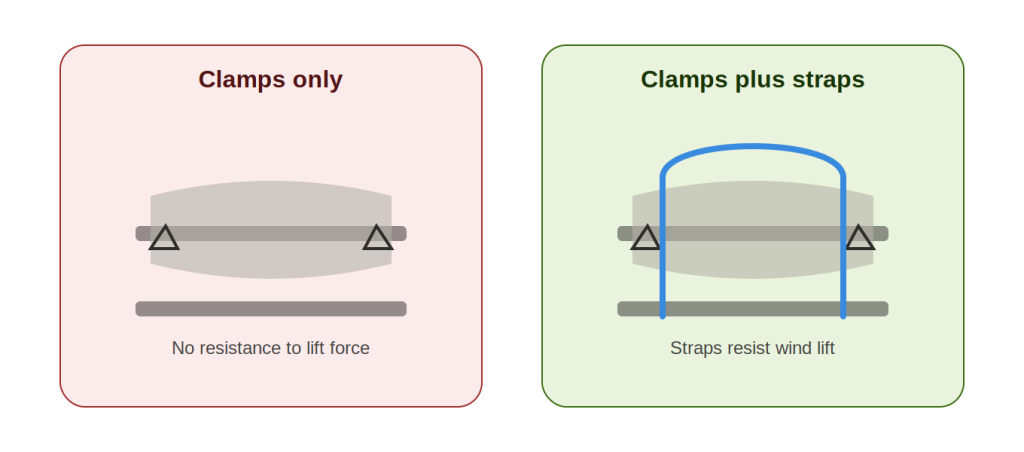
Many people assume the roof rack’s built-in clamps are enough and skip the straps. But clamps mainly stop the kayak from sliding sideways — they’re not built to handle the lifting force from wind at speed.
Do this instead: In addition to the rack clamps, run straps over the kayak and around the crossbars — one on each side — for double security.
Mistake #2: Not securing the bow and stern
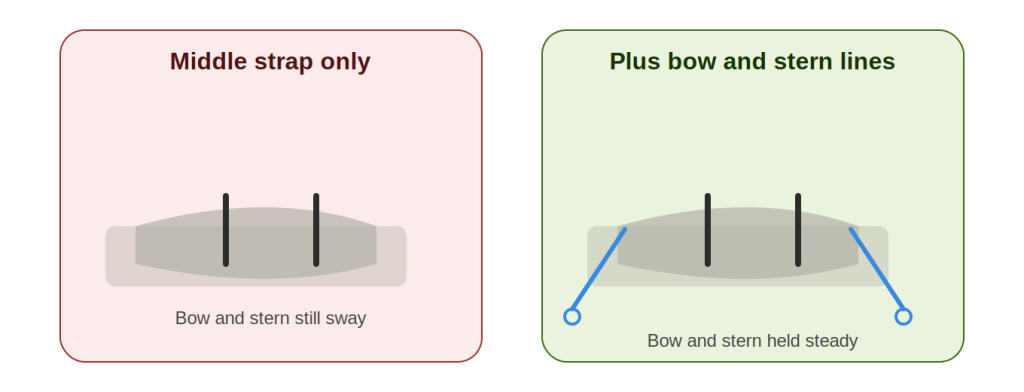
Securing only the middle of the kayak and leaving the ends free is one of the most common mistakes. Kayaks are long and narrow, so at speed the bow and stern tend to bounce and sway the most.
Do this instead: Beyond the crossbar straps in the middle, use a separate bow line and stern line, tied off to your vehicle’s tow hooks or dedicated anchor points at the front and back, to stop front-to-back whipping.
Mistake #3: Straps that “look” tight but aren’t
Some people tap the kayak, feel like it’s not going anywhere, and call it done — without actually tightening the straps properly. Wind force and vibration at highway speed are far stronger than a hand tap.
Do this instead: Tighten until you can push hard on the kayak with both hands and barely feel it move. Before you leave, give it a firm push test in every direction.
Mistake #4: Over-tightening and crushing the hull
For plastic or inflatable kayaks, straps that are too tight can deform the hull over time, especially in hot weather.
Do this instead: Tighten just enough that the kayak doesn’t shift — no need to crank it as tight as possible. Adding a soft pad or cloth where the strap contacts the hull helps spread out the pressure.
Mistake #5: Skipping a check before hitting the highway
Many people strap everything down and drive straight onto the highway without stopping to check again. Straps naturally loosen from vibration, especially right after you first get up to speed.
Do this instead: After 10–15 minutes of driving, pull over somewhere safe and recheck every strap and line. On longer trips, check again every 1–2 hours.
A few things worth remembering
- Replace straps that show wear, brittleness, or fading color — don’t push a worn strap further
- Keep your speed reasonable on the highway; wind resistance increases sharply as speed goes up
- Store straps in a cool, dry place when not in use — prolonged sun exposure makes the material brittle and weaker
Final thoughts
Rack clamps plus straps, bow and stern both secured, tightened just right (not too loose, not too tight), and a recheck after you’re underway — get these right, and you shouldn’t have much to worry about when transporting a kayak.
Not sure which strap length or rating fits your setup? Check out our product page — we carry kayak straps in a range of lengths and load ratings to match different roof racks and kayak sizes.